
The Michelle Alexander most people are searching for is the civil rights attorney, legal scholar, and author of The New Jim Crow: Mass Incarceration in the Age of Colorblindness (2010). Based on available estimates from aggregator sites, her net worth is most commonly cited around $5 million, though that figure comes from low-evidence sources and should be treated as a rough estimate rather than a confirmed number. There are no audited disclosures or public filings that pin it down precisely, which is true for most authors and academics at her level. Michelle Snyder’s net worth is often discussed using similar estimate-based sources rather than verified disclosures Michelle Snyder net worth.
Michelle Alexander Net Worth: Which One, Estimate Range, and How to Verify

Jordan Fitzpatrick
26 Jun 2026
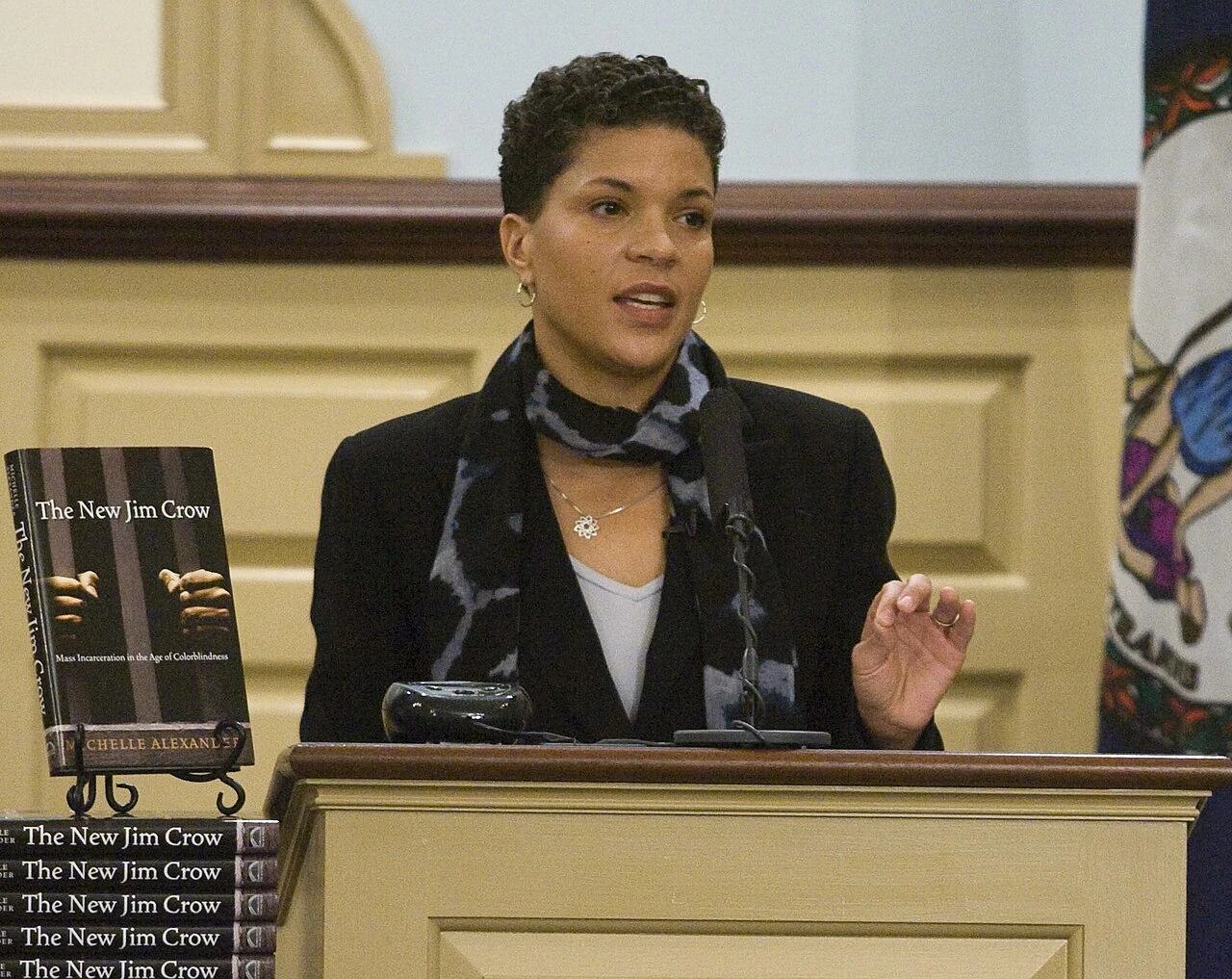
Which Michelle Alexander are we talking about?

The name Michelle Alexander shows up in a few different contexts online, so it's worth confirming you've got the right person before diving into financials. The three most common matches you'll run into are: the legal scholar and author (born October 7, 1967), a handful of local real estate agents with the same name on platforms like Zillow, and what appears to be an entertainment-adjacent profile on sites like Rotten Tomatoes. None of those last two are the subject of mainstream net-worth interest.
The Michelle Alexander this article covers is the one who graduated from Stanford Law School, clerked for Justice Harry Blackmun on the U.S. Supreme Court, and later worked as a civil rights attorney with the ACLU. She spent years as an associate professor of law at Ohio State University before gaining wider national visibility through The New Jim Crow. If the bio you're reading mentions that book and criminal justice advocacy, you've got the right person. If you're specifically searching for Michelle shanahan net worth, remember to confirm the right Michelle Alexander first, since similar-name profiles exist online.
What 'net worth' actually means here (and why numbers differ)
Net worth is simply total assets minus total liabilities. Straightforward in concept, messy in practice. For someone like Michelle Alexander, who is not a publicly traded company executive or elected official required to file financial disclosures, almost all the numbers you see online are estimates built from inference, not documentation.
Sites like CelebrityNetWorth.com openly acknowledge using a proprietary formula that factors in estimated taxes, agent fees, and lifestyle expenses. That means two sites can start with the same publicly available data points (a book deal, a speaking fee, a property record) and arrive at meaningfully different numbers depending on their assumptions. Reddit discussions on this topic often describe these figures bluntly as 'guesses,' and that's not entirely unfair. The honest framing is that these are model-based approximations, not accountant-verified balance sheets.
- Property records from county assessors can show real estate holdings, but assessed values often lag behind actual market values
- Private assets held through trusts or LLCs are rarely visible in public searches
- Book royalty income is not publicly disclosed unless reported in court filings or interviews
- Speaking fees are almost never documented publicly unless a university or government entity is required to disclose payments
- There are no SEC-style financial filings for authors or civil rights attorneys unless they hold stakes in public companies
All of this applies directly to Michelle Alexander. The $5 million figure that circulates (from aggregator sites like Networthlist.org) is not backed by primary source documentation in the public record. Treat it as a directional estimate, not a certified number. To understand why estimates vary, it helps to look at how her public income streams are modeled in net-worth calculations michelle schwartz net worth.
Where her income and wealth actually come from
Understanding the income sources is more useful than debating whether the number is $4 million or $6 million. Michelle Alexander's wealth is built on several compounding streams, most of which have grown steadily since 2010.
Book royalties from The New Jim Crow

This is almost certainly her largest single wealth driver. The New Jim Crow was published in 2010 and became one of the most widely read and assigned books in American higher education over the following decade. It has been reprinted multiple times, assigned in college courses across the country, and adapted into documentary and educational formats. Even at a relatively modest royalty rate (say, 10 to 15 percent on a paperback), sustained six-figure annual sales would generate meaningful ongoing income. A book at that cultural moment and with that longevity likely earned well into the millions over its lifetime, especially across hardcover, paperback, e-book, and international editions.
Academic salary and university positions
Alexander held a faculty position at Ohio State University's Moritz College of Law, and she has been affiliated with Stanford Law School. Senior law professors at major research universities typically earn between $200,000 and $400,000 annually, with endowed chairs pushing higher. While exact figures for her appointments are not publicly disclosed, this represents a reliable and substantial baseline income stream that has run for many years.
Speaking fees and public appearances
Hamilton College documented hosting her for a public lecture tied to The New Jim Crow, and this kind of institutional speaking engagement is a significant income source for authors of her profile. Hamilton College reported hosting Michelle Alexander for a public lecture tied to The New Jim Crow on April 17, reflecting her active public-speaking profile and expertise. High-demand speakers on criminal justice and civil rights topics can command anywhere from $15,000 to $50,000 or more per engagement at universities, foundations, and corporate diversity events. Given the sustained relevance of her subject matter, this is likely a consistent annual income stream.
Media, grants, and fellowships
Authors and scholars at her level frequently receive foundation grants, fellowships, and institutional funding for research or advocacy work. While specific grant amounts are not publicly documented for Alexander, it is a standard part of the financial picture for civil rights scholars with her visibility. Media appearances (op-eds, broadcast interviews, documentary contributions) add smaller but real income on top of this.
The net worth estimate range as of 2026
| Source | Estimate | Source Type | Confidence Level |
|---|---|---|---|
| Networthlist.org | $5 million | Aggregator estimate, no primary documentation cited | Low |
| General aggregator consensus (multiple sites) | $3–6 million range | Model-based inference from career profile | Low to moderate |
| Primary source corroboration (property, court, filings) | Not located as of June 2026 | No verified public record found | N/A |
The honest answer is that $3 million to $6 million is a reasonable directional range based on career profile and income modeling, with $5 million being the most commonly cited single figure. But without primary corroboration from property records, court filings, or disclosed financial information, the uncertainty is high. This is not unusual for authors and academics who are not required to file public financial disclosures.
Compare this to someone like Michelle Schroeder-Gardner, a personal finance blogger whose income streams are heavily documented through her own public content, or other Michelles in the public eye whose earnings come through disclosed contracts. In contrast, Michelle Schroeder-Gardner's net worth is commonly calculated using her detailed, publicly shared personal finance and business income data. For a civil rights scholar and author, the paper trail is thinner.
How her wealth has likely changed over time
Michelle Alexander's financial trajectory follows a clear arc tied to the publication and cultural rise of The New Jim Crow.
- Pre-2010 (early career): Income primarily from legal work, ACLU positions, and academic salaries. Comfortable professional income, but not significant wealth accumulation beyond that baseline.
- 2010 to 2014 (breakout): The New Jim Crow is published and gains rapid traction in academic and activist circles. Book advance, early royalties, and a spike in speaking invitations begin building a second income stream on top of academic salary.
- 2014 to 2020 (peak cultural moment): The book becomes required reading at hundreds of universities and gains renewed mainstream attention amid criminal justice reform movements. Royalty income likely at its peak. Speaking fees at their highest. National media visibility translates to more institutional opportunities.
- 2020 to present (sustained relevance): Ongoing royalties continue as the book remains widely assigned and cited. Alexander transitions toward writing, fellowship work, and advocacy with possibly reduced teaching load. Income may have shifted composition but not necessarily declined.
What could push her net worth up or down
Net worth is not static, and there are real factors that could move Alexander's number in either direction from the current estimate.
Upside factors
- A second major book or updated edition of The New Jim Crow would generate a new advance and renewed royalty cycle
- Increased speaking demand tied to criminal justice policy developments or election cycles
- Foundation grants, named fellowships, or endowed chairs at major universities
- Documentary, film, or television adaptations tied to her work (with associated rights payments)
- Real estate appreciation if she holds property in high-value markets
Downside factors
- Declining book sales as the title ages and faces competition from newer criminal justice titles
- Reduced academic income if she takes on fewer institutional roles
- Any undisclosed liabilities (tax obligations, legal settlements) that would reduce net assets, though none have been publicly reported
- Inflation eroding the real value of assets if they are not actively invested or growing
How to verify or update this number yourself

If you want to go beyond the aggregator estimates and sanity-check the figure, here is a practical checklist for doing your own research. None of these steps will give you a perfect answer, but together they will give you a much better-grounded picture than any single website estimate.
- Confirm identity first: Cross-reference the person's bio against publisher pages (The New Press for The New Jim Crow), university faculty directories (Ohio State Moritz, Stanford Law), and Wikipedia. Make sure you're not mixing up a different Michelle Alexander.
- Search county property records: Use the county assessor or recorder's office for any county where she is known to have lived. Property ownership, sale prices, and mortgage filings are typically public. This is the most direct primary source for asset data.
- Check court dockets: Search federal PACER (for federal civil cases) and state court dockets for her legal name. Bankruptcies, civil judgments, and settlements would show up here and could materially affect net worth.
- Look for LLC or corporate registrations: Run her name through your state's business entity search. If she holds assets through an LLC, the registration is usually public even if the financials are not.
- Monitor publisher sales data: While publishers don't release exact royalty figures, occasionally book sales milestones are reported in trade press (Publishers Weekly, the New York Times book coverage). These give you a floor for estimating royalty income.
- Use multiple aggregator sites for triangulation: If CelebrityNetWorth, Networthlist, and similar sites all cluster around the same range, that adds marginal confidence. If they diverge widely, treat the number with more skepticism.
- Check for recency: Net worth estimates on aggregator sites are often not updated regularly. Note the 'last updated' date if one is shown, and discount figures that are several years old without a revision.
The bottom line is that $5 million is a reasonable starting estimate for Michelle Alexander's net worth as of 2026, built on a career that combines sustained academic income, one of the most influential books in recent American legal history, and consistent high-level speaking activity. But it is an estimate, and anyone claiming to know the precise figure is overstating their evidence. For a figure you can trust more, the blank" rel="noopener noreferrer">property records and court dockets are your best primary sources, and they take about 20 minutes to check.
FAQ
Is Michelle Alexander’s net worth ever officially verified?
No reliable “verified net worth” number is available for her in the way it is for public-company executives. In practice, the best you can do is triangulate from primary signals like property ownership records, mortgage liens, and probate (if any), then compare that to likely income patterns from books, speaking, and academic appointments. That triangulation is still an estimate, but it is anchored to records you can look up.
How can I be sure I’m using net-worth info for the correct Michelle Alexander?
Be careful with the name. The most common mix-ups are the real estate agent profiles and entertainment listings that share the same name. A quick check is whether the bio mentions The New Jim Crow, Stanford Law School, ACLU work, or the Ohio State faculty role, not just general “author” labels.
Why do different websites report very different Michelle Alexander net-worth figures?
A large estimate gap usually comes from different assumptions about (1) how much of book earnings were royalties versus advances, (2) taxes at different income levels and years, and (3) ongoing expense assumptions such as travel, staff support, and retirement saving. When you compare sites, look for whether they explain their royalty rate and modeling method, not just the final number.
Could her net worth be lower even if her income is high?
Yes, net worth can lag behind high annual earnings. If substantial income went to taxes, legal advocacy expenses, student loans, or charitable giving, or if the wealth is mostly in illiquid assets (retirement accounts, restricted compensation, or home equity), the reported net worth may look lower than expected for a given year.
What’s the biggest mistake people make when using net-worth estimates?
If you find a number that is presented as exact, treat it as a red flag. For authors and academics without mandatory financial disclosures, “precise” claims are almost always model outputs. A more trustworthy approach is to use a range and then test whether the implied assets are plausible against property records and known public career milestones.
How should I use property records to sanity-check a net worth estimate?
Property records can help, but they do not tell you total wealth by themselves. You generally need to distinguish between what she owns directly, what is owned jointly, and whether there are liens or mortgages that reduce equity. Equity, not purchase price, is what most net-worth models should reflect.
Can court records confirm or refute a specific net-worth number?
Yes. Court dockets can indirectly affect net worth, for example via judgments, settlement information, or liens. That said, not all financial impacts will be visible in public filings, and many cases do not disclose settlement amounts. Use dockets to rule out extreme outcomes rather than to “prove” an exact figure.
Besides book royalties, what income streams matter most for Michelle Alexander-style net-worth modeling?
Book sales are only one slice. For long-running authors, you also want to consider documentary or educational licensing, speaking engagements, institutional consulting, and any paid advisory work. A practical way to sanity-check is to estimate a plausible number of speaking events per year and see whether the implied annual income could support the net-worth range over time.
Can net-worth checks be incomplete if assets are held in trusts or retirement accounts?
Yes, and it’s a common edge case. If any wealth is held through retirement accounts, trusts, or accounts under different naming structures, public records may show home or property equity but miss the largest liquid portion. That can make net worth look too low on record-only checks.
What is a practical step-by-step way to narrow the $3 million to $6 million type range?
The article gives a starting range, and you can narrow it by building a simple balance sheet: estimate annual investable income from speaking, teaching, and book-related income, subtract plausible taxes and living costs, then add approximate asset categories (cash, retirement, home equity). The narrower you make assumptions, the more likely you are to be wrong, so it’s better to keep a band (example: mid-single-digit millions) unless primary records clearly support a higher or lower equity level.
Next Articles

Michelle Kessler-Sanders Net Worth: Estimate and How It’s Derived
Disambiguates Michelle Kessler-Sanders, then estimates net worth range with verified vs speculative drivers and how to v

Michelle Shanahan Net Worth: Best Estimate and How It’s Measured
Best estimate of Michelle Shanahan net worth with a range, disambiguation, and how assets, income, and liabilities are m

Michelle Snyder Net Worth: Estimated Range and How It’s Calculated
Estimated Michelle Snyder net worth range with calculation steps, evidence checks, and tips to avoid name mixups and out